
NEWS
Knowing when to replace activated alumina desiccant is essential for maintaining reliable moisture control and protecting downstream equipment. A rising outlet dew point, reduced drying performance, or physical damage to the media can signal that it is time to inspect the dryer bed. However, not every performance issue means replacement is necessary: some desiccant can be regenerated if it remains in good condition. This guide explains the signs operators should watch for and how to assess whether regeneration or replacement is the right next step.
The practical question is not simply how old the bed is. It is whether the dryer can still meet its moisture specification for the required operating period, under normal feed conditions, after a properly completed regeneration. A bed that fails that test may be exhausted, contaminated or damaged—but the same symptoms can also come from valves, instrumentation or upstream liquid carryover. Replacing media before checking those causes can turn an expensive maintenance job into a repeat problem.
Start with the outlet dew point—and the trend behind it
For a gas dryer, the most useful early warning is often a change in outlet moisture. Compare the current reading with the dryer’s specified outlet condition and with its own historical performance at similar pressure, flow, inlet temperature and cycle timing. A single reading outside the normal range deserves attention, but a pattern is more informative.
In a twin-tower system, look at each tower separately. If one tower consistently produces a higher outlet dew point or reaches the moisture limit earlier in its adsorption cycle, the problem may be local to that tower: its bed, regeneration circuit, switching valve or flow distribution. If both towers deteriorate at about the same time, investigate shared causes such as a wetter feed, a failing separator, an overloaded dryer or a common analyzer problem.
Timing matters. A brief moisture increase immediately after tower switching may point toward valve leakage, inadequate cooldown or a transient in the sampling system. A gradual rise near the end of the adsorption period is more consistent with breakthrough as the working capacity of the bed is used up. Neither pattern alone proves that the alumina must be replaced, but each gives the maintenance team a different place to start.
Also check what the instrument actually reports. Pressure dew point and atmospheric dew point are not interchangeable. A change in measurement pressure or an incorrect conversion can make a healthy dryer appear to be failing. Record the pressure, temperature and sample location with the reading, and follow the site procedure for verifying the analyzer and sample system.
Signs that deserve a closer inspection
Dew point is the primary performance signal, but it is not the only one. The following observations become more persuasive when they appear together or persist after operating conditions return to normal.
- Earlier breakthrough: the outlet meets specification after changeover but fails progressively earlier than it used to, at comparable feed conditions and cycle settings.
- Little recovery after regeneration: the regenerated tower starts its next adsorption cycle with poor outlet quality, even though regeneration conditions have been checked.
- Increasing pressure drop: a sustained rise across a tower may indicate fines, fouling, liquid accumulation or a restriction in the vessel or associated piping.
- Unusual dust or damaged beads: fines in downstream filters, crushed media or heavily abraded particles suggest mechanical deterioration and possible problems with bed support or flow distribution.
- Visible contamination: oil, deposits, sludge or unexpected discoloration on a representative sample justify an investigation into the feed and the suitability of the remaining bed.
Pressure drop is not a replacement criterion by itself. A plugged inlet screen or downstream filter can create a misleading differential pressure reading, and the normal value changes with flow and gas properties. Compare like with like and confirm where the pressure taps are located before blaming the bed.
Similarly, bead color alone is a weak diagnostic. Activated alumina can change appearance for several reasons, and not every change indicates a loss of useful capacity. If contamination is suspected, identify its source and ask the media supplier or a qualified laboratory whether a sample can be assessed for the operating service.
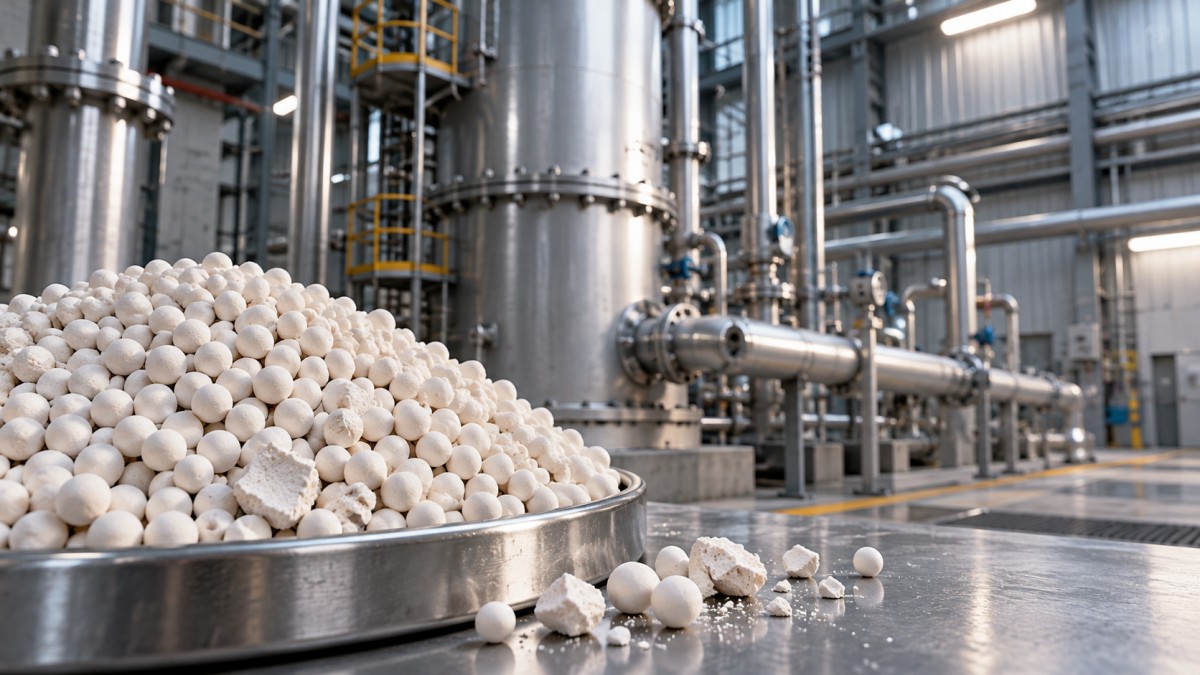
Rule out the problems that a new bed will not fix
A dryer is designed around a feed envelope. When the actual water load exceeds that envelope, even fresh activated alumina desiccant can reach breakthrough too soon. In a chemical plant, the change may come from a process upset, increased throughput, warmer inlet gas, an ineffective aftercooler or a separator that is no longer removing entrained liquid.
Check the upstream knockout drum, automatic drains and filters against operating records. A drain that is blocked, isolated or incorrectly set can allow liquid to reach the bed. Activated alumina is intended to adsorb moisture; it should not be treated as a substitute for bulk liquid separation. Repeated liquid carryover can overload the dryer and may damage the media, depending on the service and conditions.
Then review the regeneration sequence. For a heated regenerative dryer, the issue may be insufficient heat reaching the bed, inadequate purge flow, a shortened heating period or a cooldown that does not match the equipment design. For a heatless system, purge pressure, purge flow and switching performance deserve particular attention. Use the dryer manufacturer’s procedure rather than applying a generic temperature or purge setting.
A heater showing the correct outlet temperature does not automatically mean the entire bed received adequate regeneration. Temperature indication location matters, as do gas flow and the actual duration at operating conditions. Review the trend through the full cycle, not just the peak value. If a heater, controller or purge valve has been repaired, allow a properly completed cycle before judging whether the media recovered.
Switching valves can complicate the diagnosis. Leakage between wet and dry sides, or through a regeneration line, may raise outlet moisture even when the bed itself has usable capacity. Follow the site’s approved leak-check method; do not infer valve integrity solely from the actuator’s open or closed indication.
Regenerate or replace? Use evidence from the full cycle
Regeneration is the sensible next step when the media is physically sound, the feed has not exposed it to an incompatible contaminant, and there is reason to believe the previous cycle was incomplete. Once the cause has been corrected, run a regeneration according to the equipment and media supplier’s instructions. Then evaluate the tower through a normal adsorption cycle at representative load.
Successful recovery means more than a good reading immediately after switch-over. The outlet should remain within the required specification for the intended operating period, with a reasonable margin for normal process variation. If the dew point climbs again halfway through a cycle that the tower previously completed comfortably, document the feed conditions and repeatability before deciding whether the working capacity has deteriorated.
Replacement becomes more compelling when an adequately regenerated bed repeatedly fails under comparable conditions, especially if inspection also shows severe crushing, persistent fouling or contamination that the supplier does not consider recoverable. In some services, a laboratory assessment of a representative sample can help distinguish loss of adsorption capacity from an equipment issue. Ask what the test measures and how the result relates to the actual gas composition and outlet requirement; a single laboratory number does not reproduce every operating condition.
Avoid the opposite assumption as well: a bed that is still producing a dry outlet is not necessarily in good mechanical condition. If fines are accumulating or pressure drop is increasing, waiting for a dew-point alarm could leave the downstream system exposed to particulate carryover or force an unplanned shutdown. The correct decision may be to schedule replacement before moisture breakthrough occurs.
What about a fixed replacement interval?
A planned interval can be useful where access is difficult, failure consequences are high or the plant has a reliable service history. It is a planning tool, not proof that every bed has reached the end of its life. Conversely, an interval should not override a clear deterioration trend. Use the equipment supplier’s recommendations as a starting point, then refine the schedule from measured performance, inspection findings and the plant’s tolerance for an unscheduled outage.
Inspecting the bed without creating a safety problem
Opening a chemical-process dryer is a maintenance activity, not a quick visual check. Before sampling or unloading, follow the site’s isolation, lockout, depressurization, purging, testing and permit requirements. The vessel and its contents may retain hazardous process material, and hot media can remain unsafe after shutdown. Confined-space entry, where applicable, requires its own approved controls.
Do not assume used alumina can be handled or disposed of like fresh media. Its hazards depend on what it has adsorbed or contacted. Review the relevant safety data, assess the actual contaminants and use the site’s waste-classification and disposal procedures. If the service involved toxic, flammable or reactive compounds, involve the responsible safety and environmental personnel before opening the vessel.
When inspection is authorized, look beyond the top surface. Channeling, liquid exposure and contamination may be uneven. A clean-looking layer near an opening does not establish that the whole bed is sound. Take samples and document their locations using the supplier’s or site’s approved method; avoid disturbing support layers or entering the vessel simply to obtain a sample.
Record bead condition, the presence of fines, deposits, odor where safely assessed under site procedures, and the condition of inlet devices, screens and supports. If the bed has settled or contains a large amount of broken material, investigate how it happened. High gas velocities, poor distribution, vibration or inadequate support can contribute to mechanical damage. Putting new media over an unresolved mechanical problem is unlikely to be a durable repair.
Replacing the media: details that affect the next run
Confirm the specified alumina grade, bead size, loading quantity and bed arrangement before ordering or unloading. A vessel may contain support material, screens or multiple adsorbent layers; the order and depth of those layers matter. Do not assume a visually similar bead is interchangeable. Adsorption duty, mechanical strength, pressure drop and regeneration requirements all depend on the selected media and the dryer design.
During the outage, inspect and repair damaged internals, clean the vessel as required, and address the source of any oil or liquid carryover. Check the condition of downstream particulate filters and replace elements according to the equipment procedure. If the investigation found a faulty drain or leaking valve, close that work before returning the dryer to normal service.
Keep replacement media protected from moisture and contamination until loading. Follow the supplier’s instructions for handling, filling and any required commissioning or initial conditioning. Avoid dropping or conveying beads in a way that unnecessarily creates fines. Loading methods vary by vessel and media, so use the approved procedure rather than improvising from a different dryer model.
After startup, verify flow, pressure drop, switching and outlet moisture against the commissioning procedure. Do not treat the first acceptable reading as the end of the job. Trend each tower through complete adsorption and regeneration cycles, and note any initial transient separately from steady operation. Keep the bed type, load date, batch identification where available, operating settings and baseline readings with the maintenance record.
Make the next replacement decision easier
The most useful record is often a simple one: outlet dew point by tower, time since switch-over, feed flow and pressure, inlet temperature, pressure drop, and regeneration temperatures or purge conditions as applicable. Add notes when the process changes or an upstream separator is serviced. A trend without operating context can be misleading; a dew-point increase during a temporary overload tells a different story from the same increase at normal load.
Set investigation and action limits around the actual downstream requirement and the instrument’s capabilities. A warning should leave enough time to check the sample system, switch equipment if the design permits, and decide whether continued operation is acceptable under site procedures. If moisture can affect a reaction, catalyst, product quality or safety-critical equipment, the operating team should agree in advance on what happens when the limit is reached.
For a separate packaging or sealed-enclosure moisture problem, molecular sieve packets may be worth assessing. The Molecular Sieve Desiccant Pack (3A/4A/13X) is offered in 3A, 4A, 5A and 13X types, with packet weights from 1 g to 500 g and custom options. Those packets are not a drop-in replacement for a bulk activated alumina dryer bed: select the adsorbent, packaging and quantity for the enclosure, moisture load and compatibility requirements, and confirm the applicable technical documentation before use.
Can't find what you're looking for ?
Leave a Message we will call you back quickly!
Get in Touch
*We respect your confidentiality and all information are protected.