
PRODUCTS
Product classification
‹
›
‹
›
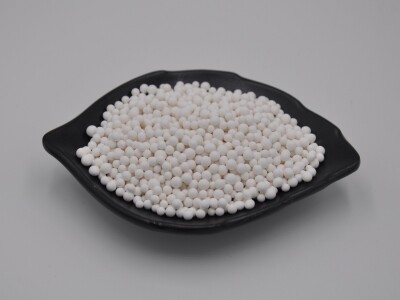
Macroporous alumina microspheres
Product Description
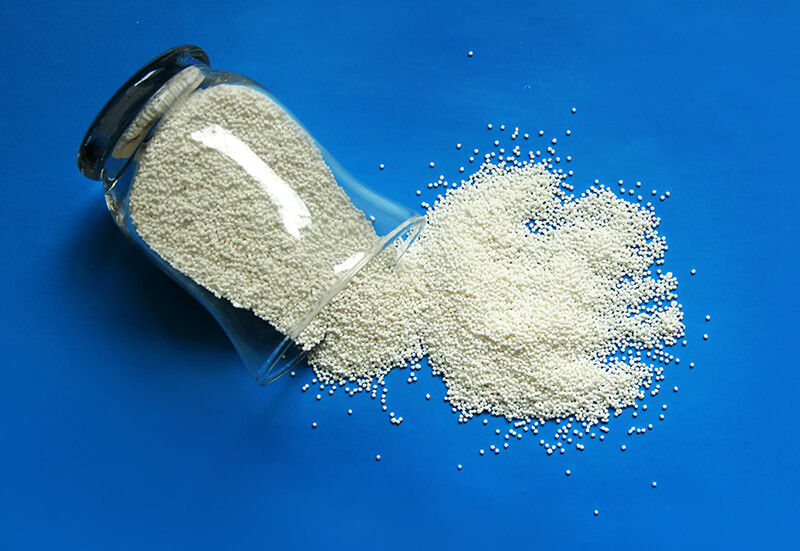
Macroporous Alumina Microspheres
Engineered spherical alumina microspheres with interconnected macroporosity (pore diameters > 50 nm) and high surface area. Designed for demanding catalyst support, high-flow adsorption, and heavy-metal removal applications where rapid mass transfer and low pressure drop are critical.
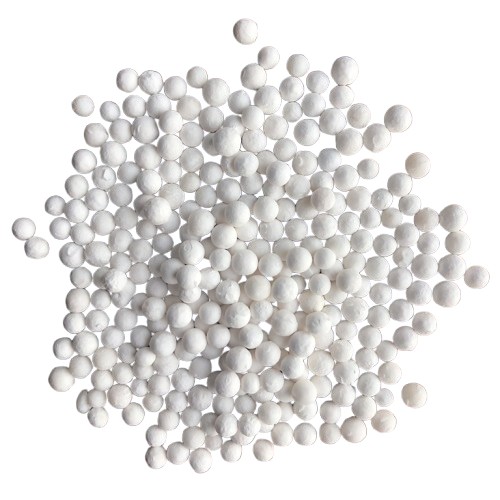
Spherical Geometry & Internal Architecture
Bimodal pore structure combines macroporous transport channels with mesoporous active sites.
Key Application Fields
From petrochemical catalysis to advanced water treatment — macroporous microspheres excel.
Hydrotreating & Resid Upgrading
Used as catalyst support for heavy oil hydroprocessing, where large molecules require accessible pore architectures and stable alumina matrix.
- High metal (Ni, Mo, Co) loading capacity
- Resists fouling from asphaltenes
- Extended cycle length
Selective Adsorption & Ion Exchange
Ideal for removal of fluoride, arsenic, and heavy metals from aqueous streams, as well as drying and purification of organic solvents.
- Fast adsorption kinetics
- High capacity for anions/cations
- Regenerable with mild elution
Scrubbing & Catalytic Oxidation
Deployed in VOC abatement, ozone decomposition, and selective catalytic reduction (SCR) units as a robust, thermally stable support.
- Thermal stability up to 1200 °C
- Resists acid/basic gas attack
- Low pressure drop in packed beds
Technical Specifications (TDS)
Standard physical and chemical property benchmarks for macroporous alumina microspheres.
Engineered Performance Advantages
Designed for process intensification and long-term reliability.
1. Rapid Mass Transfer
Interconnected macropores act as high-speed highways for reactants, while mesopores provide abundant active sites — eliminating diffusion barriers.
2. Superior Flow Distribution
Spherical morphology ensures even liquid/gas distribution, minimizing channeling and maximizing utilization of the entire bed volume.
3. High Attrition Resistance
Robust sphere integrity reduces dust formation during handling and operation, improving reactor hygiene and reducing downstream fouling.
4. Chemical Versatility
Stable in wide pH range (2–12) and tolerant to organic solvents, making it a universal platform for diverse catalytic and adsorption processes.
Get a Free Quote
Related Products
 Catalyst Carrier Ball
 Trilobe Shape Catalyst Carrier
 Extrude Shape Catalyst Carrier
 Five toothed spherical catalyst carrier
 Ring Shape Catalyst Carrier
 Macroporous alumina microspheres
 Reforming Catalyst Support
 Spherical Alumina Aupport For Adsorption
 Catalyst Carrier For Ebullating Bed
 Calcined active α-alumina microspheres
Get in Touch
*We respect your confidentiality and all information are protected.